Charlotte Mason Living Books
Charlotte Mason living books are the heart of her method, and she never published an official approved list of titles. Pages selling a “Charlotte Mason approved” catalog imply she signed off on a set of books. She did not. She gave criteria, not a catalog. AmblesideOnline, the closest thing the CM world has to a canonical modern booklist, says so on its own site.
What Mason actually said
Mason’s standard was the living book, and its opposite was twaddle. From Parents and Children:
Children must have books, living books; the best is not too good for them; anything less than the best is not good enough… They must grow up upon the best. There must never be a period in their lives when they are allowed to read or listen to twaddle.
On how a book earns living status, from School Education, Volume 3, she made clear it is not an adult credential check:
A book may be long or short, old or new, easy or hard, written by a great man or a lesser man, and yet be the living book which finds its way to the mind of a young reader.
Working from her writing, a living book generally:
- Is written by one person with real command of and passion for the subject, not a committee-written textbook
- Uses literary, narrative language rather than flat, dumbed-down “reading-made-easy” prose
- Carries ideas, not just facts to memorize
- Passes what CM circles call the two-page test: does it hold a child’s attention and imagination, or not
Twaddle, by contrast, is choppy, condescending, or fact-stuffed writing that entertains without feeding the mind. Think encyclopedia-style summaries or easy-reader retellings that strip out voice and ideas. That is not the same thing as light reading or humor. Mason’s own students read plenty of fairy tales and adventure stories. The test is quality of writing and idea-density, not genre or difficulty.
Where the closest thing to a real list comes from
Mason ran actual schools through the Parents’ National Educational Union (PNEU). Those schools worked from term-by-term Programmes listing the specific books each Form was reading. Programme 94, published shortly before her death in 1923, is the last one confirmed to be hers. That is the real primary source. Charlotte Mason Poetry publishes the vintage PNEU programmes and exam questions themselves.
Most modern Charlotte Mason booklists are reconstructions built from those programmes, not the programmes themselves, and they do not all agree:
- AmblesideOnline (AO): free, and the most widely used reconstruction. It cross-references the original PNEU programmes and is generally regarded as the closest fit to what Mason’s own students actually read.
- Simply Charlotte Mason (SCM): a paid curriculum with its own book selections and philosophy on some calls, such as when to introduce mythology, which sometimes differ from AO’s.
- Ambleside Schools International and the Charlotte Mason Institute’s Alveary: other reconstructions used mainly in schools, with their own selections.
None of these is the official list. Even AO’s own advisory says plainly that their booklist is not infallible or complete on its own. It is a starting point that assumes you understand Mason’s methods, not a substitute for them. For how those lists show up in schools, see AmblesideOnline vs Alveary and the curriculum comparison.
How the reading breaks down, Form by Form
Early Forms read a set of specific, named titles, one after another. Older Forms read fewer named “spines” and more continuous threads: the same subject followed year after year at increasing depth. That is not a gap in this page; it is how Mason’s own programmes actually shifted as students aged. Two pages below cover the youngest years title by title. Four subject pages cover Shakespeare, Plutarch, poetry, and history the way they are actually taught across the rest of a student’s education, as ongoing threads rather than single-year lists.
- Form I books: Roughly K–3: short, complete stories — fables, fairy tales, and the first history and nature titles.
- Form II books: Roughly 4th–6th: first full-length novels, the first unedited Shakespeare play, and the start of Plutarch.
- Shakespeare: How the plays are sequenced, from a first prose retelling through a full, unedited play every term for years.
- Plutarch: Why Mason called it a storehouse of great ideas, which Lives come first, and how the reading method differs.
- Poetry: The one-poet-per-term rotation, Form by Form.
- History: The narrative spines used instead of a textbook, and how the chronology repeats at greater depth.
- Nature study: Field guides and reference books, separate from the weekly practice of keeping a nature journal.
By Form III, reading stops being organized as a short list of named books tied to that one Form. Plutarch, Shakespeare, poetry, and history keep running as the same four threads at growing depth, alongside full, unabridged classic literature chosen title by title rather than as a fixed spine. That is why there is no separate “Forms III–VI books” page: past Form II, the four subject pages above are the reading list.
For the actual, complete, term-by-term lists, AmblesideOnline publishes full free booklists for Years 0–12, plus subject-specific pages for Plutarch, Shakespeare, and poetry rotations. Charlotte Mason Poetry publishes the original PNEU programmes for readers who want the primary source itself.
Books people call Charlotte Mason that aren’t quite
Worth flagging, since this trips up a lot of new-to-CM families:
- Sonlight is a well-regarded literature-based curriculum, but it is not a Charlotte Mason curriculum and does not claim to be. It is frequently recommended alongside CM lists for its living-book quality, which is a different thing than being CM-aligned.
- The Story of the World by Susan Wise Bauer is a classical-education history spine, not drawn from Mason’s programmes. It is popular in overlapping homeschool circles, which leads to it being mislabeled CM fairly often.
- Any blogger’s “living books list” is exactly that: one person’s judgment call, informed by CM’s criteria but not vetted against the PNEU record. Some are excellent. Treat them as a curated opinion, not a verified source.
- AO’s and SCM’s own booklists are reconstructions, not the original programmes, and they say so. Both organizations have made real editorial calls Mason herself never made: what to do about outdated racial language in old texts, when to introduce mythology, which Bible translation to use.
Where to go deeper
Organizations and resources worth pointing families to beyond AmblesideOnline:
- AmblesideOnline: Free Year 0–12 booklists, plus subject pages for Plutarch, Shakespeare, and poetry rotations.
- Charlotte Mason Poetry: Original PNEU programmes and exam questions, including Programme 94.
- Charlotte Mason Institute: Conferences and the Alveary curriculum.
- Ambleside Schools International: A network of CM-method private schools. Distinct from AmblesideOnline, despite the similar name.
- A Delectable Education: Podcast from Liz Cottrill, Emily Kiser, and Nicole Williams on Mason's principles, including reading-list episodes by subject and Form.
- Sage Parnassus: Especially useful for Plutarch and citizenship studies.
For books about choosing living books rather than lists of the books themselves, the titles most often recommended in CM circles pre-date the internet-era CM revival. They are judged on literary merit rather than curriculum alignment:
For the Children's Sake by Susan Schaeffer Macaulay
Honey for a Child's Heart by Gladys Hunt
Books Children Love by Elizabeth Wilson
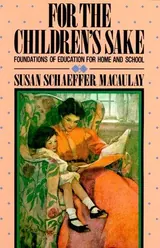
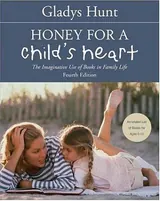
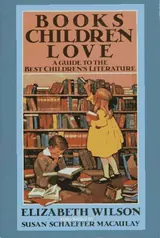
If you are sourcing physical copies rather than free etexts, several small presses reprint exactly this category of book:
- Living Book Press: Reprints of public-domain living books.
- Yesterday's Classics: Out-of-print titles kept in print for this market.
- Bethlehem Books: Living stories, many with a Catholic and historical bent.
- Purple House Press: Restored editions of out-of-print children's books.
A note on content in older books
Several PNEU staples were written well over a century ago and have not aged evenly. Modern CM curricula flag specific passages for parent preview rather than removing the books. AmblesideOnline, for instance, red-flags a racial slur in one Just So Stories chapter and a slavery-related illustration in a Ben Franklin/George Washington biography set, alongside notes on darker content in Trial and Triumph and some of Andrew Lang’s fairy tales. If you are building a library list for a school, decide in advance whether you will note these per title, the way AO does, rather than leaving families to discover them mid-read-aloud.
Common questions
What are Charlotte Mason living books?
Living books are written by one person with real command of and passion for the subject. They use literary, narrative language and carry ideas, not only facts to memorize. Mason's test is whether the book finds its way to a young reader's mind, not whether an adult committee approved it.
Did Charlotte Mason publish an official booklist?
No. She never published a 100-best-books catalog. Her schools used term-by-term PNEU Programmes. Programme 94, published shortly before her death in 1923, is the last one confirmed to be hers. Modern lists such as AmblesideOnline reconstruct those programmes.
Is AmblesideOnline the official Charlotte Mason booklist?
No. It is the most widely used free reconstruction, and it cross-references the original PNEU programmes. AO's own advisory says the list is not infallible or complete on its own. It is a starting point that assumes you understand Mason's methods.
What is twaddle in Charlotte Mason education?
Twaddle is choppy, condescending, or fact-stuffed writing that entertains without feeding the mind. Encyclopedia-style summaries and easy-reader retellings that strip out voice and ideas are typical examples. Light reading and humor are not automatically twaddle. Mason's students read fairy tales and adventure stories. The test is quality of writing and idea-density.
Is The Story of the World a Charlotte Mason living book?
It is a classical-education history spine by Susan Wise Bauer, not drawn from Mason's programmes. It is popular in overlapping homeschool circles, which is why it gets mislabeled as Charlotte Mason fairly often.
Book lists by Form and subject
Related guides
Find a school next
Living books on a tour beat living books on a brochure. Browse Charlotte Mason schools by state or browse by school type, then ask which titles are actually in use this term.