History in a Charlotte Mason Education
Charlotte Mason taught history from continuous narrative books, not textbooks — a “spine” the student reads chapter by chapter across a year, alongside biography, historical fiction, and, from Form II on, Plutarch. The chronology runs in a loop: an early pass through history in the younger Forms, then a second, deeper pass through the same chronology in the older Forms, once students can handle denser, more demanding texts.
The core spines
Three books do most of the work across a typical CM programme, all originally written for students, all still in print or free in the public domain. Alongside them, short biographical collections fill in figures the main spines pass over quickly.
Our Island Story by H. E. Marshall
British history told as a continuous narrative, starting in the legendary period. Used in the early Forms.
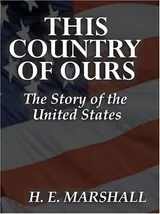
This Country of Ours by H. E. Marshall
American history, picking up as Our Island Story's British narrative winds down.
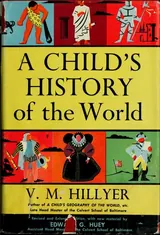
A Child's History of the World by Virgil Hillyer
A broader world-history spine used alongside the other two, especially for material outside British and American history.
Fifty Famous Stories Retold by James Baldwin
Short, self-contained biographical anecdotes filling in figures the main spines pass over quickly.
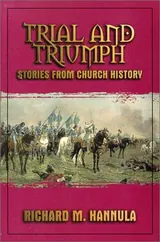
Trial and Triumph by Richard Hannula
Church history, in the same short-biography format.
How the chronology repeats
AmblesideOnline's own account of its sequencing is a useful, honestly documented example: two passes through history, not one. The first runs from early history forward through the elementary Forms. Greek and Roman history is deliberately held back until Year 6, so that students meet it in meatier books written for older readers — and then the whole chronology starts again from Year 7, this time using longer, more demanding texts, primary-source-adjacent writers, and the ongoing Plutarch and Shakespeare threads running alongside it.
First pass, Years 1–6
| Year | Period |
|---|---|
| 1 | Early history, focused on people rather than events |
| 2 | 1000 AD onward, the Middle Ages |
| 3 | 1400–1600, Renaissance and Reformation |
| 4 | The 1700s up to the French and American Revolutions |
| 5 | 1800 to 1920, up to the First World War |
| 6 | End of WWI to the present day, then two terms of ancient history |
Second pass, Years 7–12
| Year | Period |
|---|---|
| 7 | 800–1400s, the Middle Ages |
| 8 | 1400–1600s, Renaissance and Reformation |
| 9 | 1688–1815, including the French and American Revolutions |
| 10 | 1815–1901, including the American Civil War |
| 11 | The 20th century, 1900 to the present |
| 12 | The present day, plus an overview of ideas from the ancients forward |
This two-pass structure is common across CM programmes, though the exact starting point and pace vary by curriculum — see AmblesideOnline vs Alveary for how two major reconstructions differ on specifics.
Keeping track of it: timelines and the Book of Centuries
A running timeline — often a dedicated notebook called a Book of Centuries — is the usual companion to history reading in a CM education: a page per century, where a student adds a brief entry and sometimes a small sketch for a person or event as they're encountered in reading. It turns a sequence of disconnected books into one continuous chronology a student can see all at once, revisited and added to for years rather than filled in once and set aside.
The reason it's a notebook the student fills in, rather than a printed timeline on the wall, is the same reason narration beats a worksheet: the textbook timeline is passive, only there to be looked at, while placing an entry yourself means finding its right spot and reviewing everything around it on the way.
Common questions
Why does the chronology repeat instead of just moving forward once?
A first pass, in the elementary years, builds a working sense of what happened when. A second, later pass through the same chronology — with harder books and more primary material — builds real understanding, not just familiarity with the shape of events. Covering everything once, in depth, at age eight isn't the goal.
Are these spines biased toward British and American history?
Yes, noticeably. Our Island Story and This Country of Ours are explicitly British- and American-focused, reflecting where Mason's own schools operated and where most modern CM curricula were built. AmblesideOnline's advisory says outright that what it offers is the history of Western civilization. Families wanting broader world-history emphasis typically add or substitute titles alongside the core spines rather than replacing the method itself.
What's a Book of Centuries, exactly?
A long-running notebook, one spread per century, where students add brief dated entries — a name, an event, sometimes a small drawing — as they encounter them across all their history reading. A personal reference built over years, not a single assignment.