Shakespeare in a Charlotte Mason Education
Shakespeare isn't a single-year unit in a Charlotte Mason education — it's a thread running from a first prose retelling in Form I through a full, unedited play every term, every year, from Form II through Form VI. By graduation, a student has read a large share of the First Folio in full, not in excerpts.
How it actually starts
Before a student reads a single unedited line, they meet the stories. Tales from Shakespeare by Charles Lamb, or Beautiful Stories from Shakespeare by E. Nesbit, retells the plots in prose during Form I, so the student already knows what happens before the language gets difficult. Retellings of specific plays are scheduled year by year through Form I, building familiarity with the stories and characters ahead of the real text.
AmblesideOnline's advisory prefers Lamb's over Nesbit's despite its harder vocabulary, on the grounds that Nesbit sometimes simplifies a plot so far that it becomes harder to follow. That's a judgment call, not a rule — either one does the job of getting the story in first.
When the real plays start
Form II typically opens with a full, unedited comedy — A Midsummer Night's Dream or The Tempest are common first choices. AmblesideOnline schedules full plays beginning in Year 4. From there, one play is scheduled per term, spread across roughly twelve weeks — about two scenes a week — continuing every term for the rest of a student's schooling.
A sample multi-year rotation
AmblesideOnline publishes a running Shakespeare rotation for Years 4–12, shared across their community so families can compare notes on the same play at the same time. It's one concrete, documented example of how the sequencing works — not the only valid order, but a genuinely used one:
| School year | Term 1 | Term 2 | Term 3 |
|---|---|---|---|
| 2026–27 | A Midsummer Night's Dream | Hamlet | Much Ado About Nothing |
| 2027–28 | The Winter's Tale | Henry V | The Merchant of Venice |
| 2028–29 | Richard III | The Comedy of Errors | King Henry VIII |
A core set of the more accessible plays — Henry V, The Merchant of Venice, Twelfth Night, Measure for Measure, As You Like It, Macbeth, The Taming of the Shrew, A Midsummer Night's Dream, Hamlet, and Much Ado About Nothing — repeats through the rotation roughly every five to six years, so a student who starts young sees some plays twice, at very different ages.
How a play actually gets read
- One play, spread across a full term — no rush to finish in a week.
- Read aloud, in original language, not a modernized paraphrase, once a student reaches the age for full plays (Form II and up).
- Narrated after each reading, the same as any other book — see how to narrate.
- A brief synopsis before each act or scene helps orient a student without replacing the actual text. Marchette Chute's Stories from Shakespeare is commonly used for exactly this — short chapter-opening summaries meant to introduce the play, not substitute for it.
Shakespeare wrote the plays to be seen, so a good audio recording or film production alongside the text is standard practice rather than a shortcut. Parents commonly preview film versions first.
Editions and reading aids
One unedited play per term from Form II on. Any complete, unabridged edition works; the language is the point.
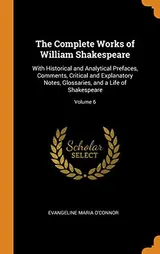
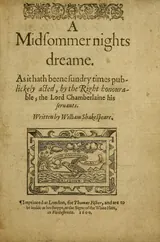
A Midsummer Night's Dream by William Shakespeare
A common first full play, chosen for a lighter tone and an easier plot to follow.
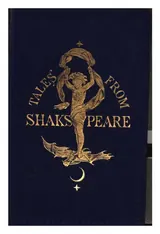
Tales from Shakespeare by Charles Lamb
Prose retellings for Form I, so the student knows the story before the language gets difficult. Beautiful Stories from Shakespeare by E. Nesbit serves the same purpose in easier language.
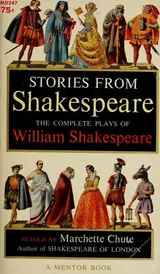
Stories from Shakespeare by Marchette Chute
Eight- to ten-page summaries, brief enough to introduce a play without replacing it. Commonly read at the opening of each act or scene.
Common questions
Is Shakespeare too hard for a nine-year-old?
Not in Mason's own programmes, and not in most modern CM curricula — Form II is the typical starting point for full plays. Form I's retellings, reading aloud rather than silently, and a full term per play make it workable at that age.
Do students read a modernized “translation” of Shakespeare?
No — original language is standard once a student reaches the age for full plays. Synopses and retellings do the modernizing work before that point, not the plays themselves. Parallel-text editions are better treated as a parent resource, since they often spell out explicitly what Shakespeare left vague.
Does every Charlotte Mason curriculum use the same rotation?
No. AmblesideOnline's schedule is one well-documented, widely used example. Other programs, including school-based curricula, choose their own sequence and pacing; the constant across CM programs is a full play per term, not a specific order.