Plutarch in a Charlotte Mason Education
Plutarch's Lives — biographies of Greek and Roman statesmen and generals, written by a Greek author who lived from roughly 46 to 120 AD — is one of the more surprising fixtures of a Charlotte Mason education. It's difficult, it's old, and Mason kept it anyway, because she treated it as a direct education in citizenship, not just ancient history.
Why Mason used it
Writing in the Parents' Review in 1899, one PNEU teacher described Plutarch as having left behind:
“a wonderful store-house of great ideas and examples, showing how the life of the individual is the life of the state, and that where private standards are high or low, public morality is upheld or falls”
The same passage cites Cato the Censor and Alcibiades side by side as opposite lessons in “what good or evil one man can do for his times.” That's the actual purpose: reading Plutarch to think about character and public duty, not to memorize Roman political history for its own sake.
The institutional record backs this up. In the early years of the Parents' Union School, Plutarch was counted under History, because nothing else fit. Later it was moved under Citizenship, and it stayed there.
When it starts and how it's read
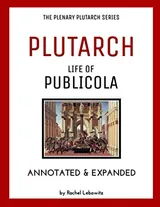
Plutarch typically begins in Form II, with an accessible Life — Publicola is a common first choice — and continues one Life per term, every term, through the rest of a student's education, the same ongoing-thread structure as Shakespeare. AmblesideOnline's rule of thumb is that a student ready to read Shakespeare's plays in the original is ready for Plutarch.
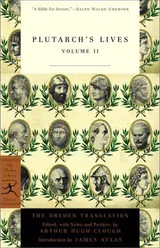
The reading method is slower and more deliberate than an ordinary narration passage, because the prose is genuinely harder — long sentences, unfamiliar names, and often 17th-century English if using the translations Mason's own students read (North's, or Dryden as revised by Clough). A common practice: the adult pre-reads the passage, lists the words most likely to trip a student up, and reviews those before the reading rather than stopping mid-passage — then reads a shorter chunk than usual and asks for narration in smaller bites.
Mason seems to have expected these lessons to be read aloud together rather than assigned as independent reading, partly because of the cost of books and partly because several Lives contain material a parent will want to preview. Opening a lesson with a short overview of what's about to happen — even at the cost of a spoiler — is a standard way to make a hard passage land.
Choosing a translation or retelling
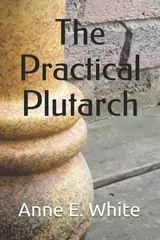
Worth keeping straight: Anne White writes AmblesideOnline's study guides, which pair an edited North/Dryden text with twelve weekly lessons, vocabulary help, and discussion questions. The children's retellings are older and by different authors — F.J. Gould, Rosalie Kaufman, W.H. Weston, and John S. White. The two serve different purposes.
North's translation is the one Mason recommended and the one Shakespeare used. Dryden's, as revised by Arthur Hugh Clough in the 1800s, is the other standard. Both are public domain and genuinely demanding.
The usual first Life, because AmblesideOnline's free study guide for it includes notes written specifically for beginners.
The Practical Plutarch by Anne White
A short guide to what these studies are for, with a six-lesson study of the Life of Eumenes offered as a first Plutarch.
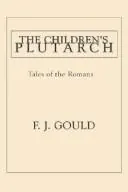
The Children's Plutarch by F. J. Gould
Two volumes, Tales of the Greeks and Tales of the Romans. The shortest and most condensed retelling, with pronunciations for the names.
Plutarch's Lives for Boys and Girls by W. H. Weston
The least abridged of the children's retellings, and not a childish edition. Rosalie Kaufman's Our Young Folks' Plutarch sits between Weston and Gould in difficulty.
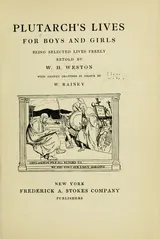
One caution on the retellings, and it comes from AO's own notes: like Bible storybooks, they sometimes lose the original's flavor, and on occasion they substitute a gorier phrase than the older translators used. Preview either way.
A sample rotation
AmblesideOnline runs Plutarch on a ten-year cycle, one Life per term, shared across their community. The current cycle:
| School year | Term 1 | Term 2 | Term 3 |
|---|---|---|---|
| 2026–27 | Pyrrhus | Nicias | Crassus |
| 2027–28 | Julius Caesar | Agis and Cleomenes | Tiberius and Gaius Gracchus |
| 2028–29 | Demosthenes | Cicero | Demetrius |
If a full term per Life feels like too much, spreading two Lives across a full year — about eighteen weeks each — instead of three is a common, reasonable adjustment, and one AO suggests itself.
Common questions
Why not skip Plutarch — isn't it just old political history?
Mason didn't use it for historical fact recall. She used it because a single life, examined closely, teaches something about character and public duty that a textbook summary can't — closer to a case study than a history lesson. The PNEU eventually classified it under Citizenship rather than History for exactly that reason.
What if the translation is too hard?
Start with a modern retelling rather than the original translation. Gould's, Kaufman's, and Weston's retellings, or a study-guide edition that pairs an edited text with weekly lessons, are common on-ramps before moving to North's or Dryden/Clough.
Does Plutarch ever end?
Not in most CM programs — it runs one Life per term from Form II through the end of secondary school, the same ongoing structure as Shakespeare.